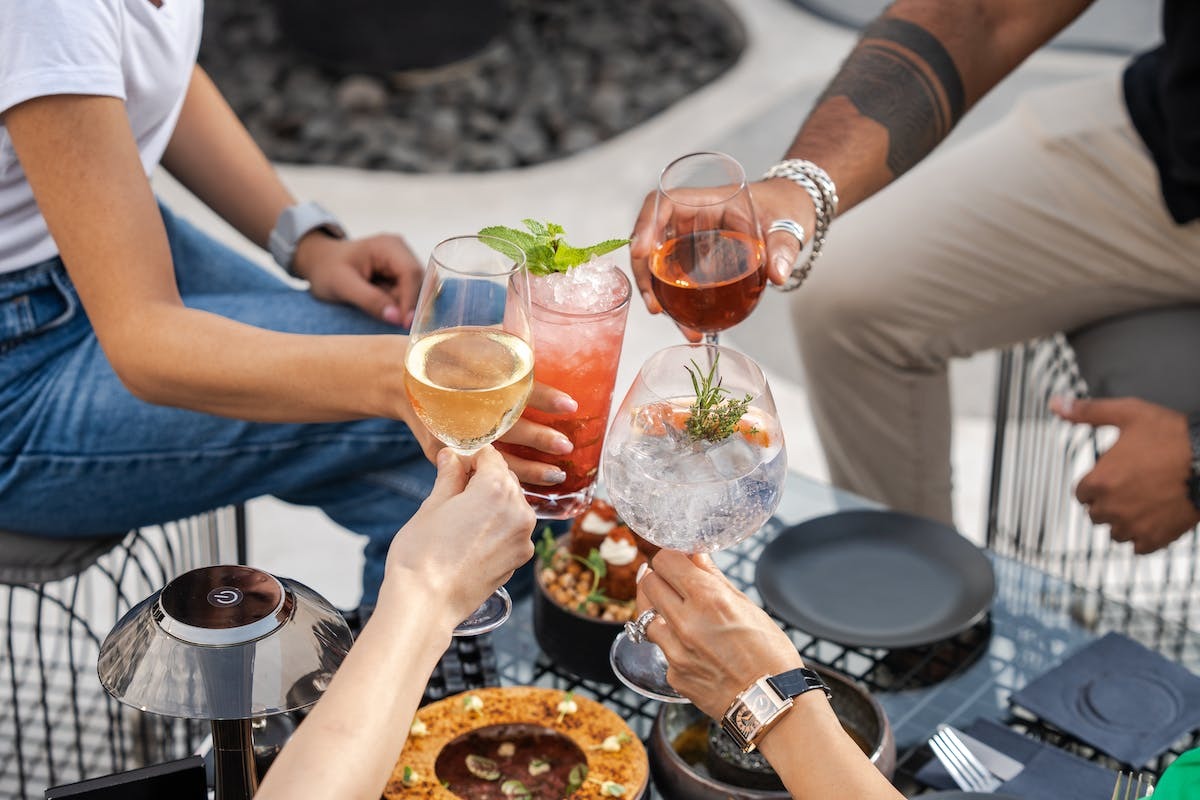
Organizing a large-scale event is a challenging task, where every detail matters. One of the most delicate aspects is forecasting the amount of drinks needed to satisfy all guests. It’s a balancing act between supply and demand, where too little can dampen the mood and too much can lead to budget disruptions. This is a well-kept secret among seasoned event organizers, yet it is a crucial aspect to ensure the success of any event. So, what are the secrets to calculating the amount of drinks for a large-scale event?
Estimating Drink Needs: The Foundations of a Large Event
In the planning of a large event, the estimation of drink needs is a task that requires special attention. A recurring topic in this process is: how many bottles of champagne for 50 people? This question is not so simple and requires a deeper examination.
A reliable way to approach this problem is to consider that a standard bottle of champagne can fill about six flutes. If we plan for two glasses per guest during the evening • a cautious estimate for a balanced event • then the calculation becomes quite easy: multiply the total number of guests (in our case, 50) by two (for two glasses per person), then divide that result by six (the average number of flutes you can serve with a single bottle).
This calculation gives approximately 17 bottles as the answer to the question “how many bottles of champagne for 50 people.” However, it is crucial to be aware that this is just a theoretical estimate; depending on the type and overall atmosphere of your event, you may need a little more or less.
Similarly, it should not be overlooked that not all your guests may drink at all or may prefer specific types of champagne: some guests are likely to lean more towards traditional brut while others may prefer rosés or demi-sec. Additionally, be prepared to offer non-alcoholic alternatives as some participants may prefer that.
In summary, the question ‘how many bottles of champagne for 50 people?’ is certainly an integral part of organizing an event. However, it is also crucial to diversify the choices offered to guests so that they feel included and satisfied. By adopting this holistic approach, your event is sure to make a splash with participants.

Key Factors for Determining the Amount of Drinks Needed
When evaluating the amount of drinks needed for a large-scale event, you must consider the number of guests. If it is a party where alcohol will be prevalent and your guests tend to be heavy drinkers, planning for a larger quantity may be wise. On the other hand, if you know that some participants are abstinent or do not drink much alcohol in general, adjust your estimates accordingly.
Another element to consider is the type of event. Weddings and formal celebrations may require more champagne or high-end wines. Conversely, when it comes to an informal gathering among friends around a barbecue in your garden on a hot summer day, cold beers and refreshing cocktails will certainly be appreciated.
Keep in mind that there is still an infinite variety of options: red or white wine? Classic or creative cocktails? Craft or traditional beers? Estimating the drinks needed for a large-scale event can seem complex. By taking into account these different factors such as the duration of the event, the profile of the guests, the type of event, and the environmental climate, you will have a realistic estimate to avoid shortages or unnecessary surpluses. Don’t hesitate to consult a professional in the field who can guide you in this process and help you provide a memorable experience for your guests.
Tips to Avoid Calculation Errors and Anticipate Unforeseen Events
In order to avoid calculation errors and anticipate unforeseen events, here are some tips to consider when estimating drink needs for a large event.
Targeted at a younger and festive audience, you might consider more popular and affordable drinks.
Another tip is to take into account the type of event. If it is, for example, a cocktail dinner where guests are likely to quickly consume several different drinks, you should plan for a higher quantity for each type. Similarly, if your event takes place in summer or in a hot region, remember that there will be an increased demand for refreshments.
It is also wise to include a buffer margin in your estimates to account for potential unforeseen events such as delays or unexpected attendance. Planning for about 10% more can be a good practice to avoid any shortages during your event.
Don’t overlook the consideration of specific dietary habits such as alcohol-free or sugar-free diets. Make sure to offer various choices tailored to everyone’s needs, to ensure the satisfaction of all guests.
An important point to emphasize: it is better to have leftovers than to run out. Unopened drinks can be saved for a future event or distributed to staff at the end of the evening. This also helps avoid additional costs related to last-minute purchases.
Accurately estimating drink needs for a large-scale event requires careful analysis of the target audience and the type of event as well as a buffer margin to handle any eventuality. By following these wise tips, you will be ready to delight your guests with a suitable selection that meets their expectations throughout your event.
Recommended Drinks According to the Type of Event
When planning a large-scale event, you need to choose the right drinks to satisfy the tastes and expectations of your guests. Depending on the type of event you are organizing, certain drinks will be more suitable than others.
For a formal event such as a gala or an official reception, it is recommended to favor fine wines and high-end spirits. Opt for a varied selection including champagne, red and white wine, as well as crafted cocktails made from refined spirits such as gin or vodka. You can also offer a selection of prestigious liqueurs to accompany desserts.
If your event is focused on friendliness and relaxation, like an evening with friends or an outdoor barbecue, you can opt for craft or international beers as well as refreshing fruit-based cocktails. Non-alcoholic beverages such as craft sodas or iced infusions can also be appreciated by those who prefer not to consume alcohol.
For a themed event such as a Mexican or Asian night, feel free to include traditional drinks associated with these cultures. Spicy margaritas with mezcal for a Mexican night, or jasmine-flavored iced teas for an Asian atmosphere.
For a sports event or a dance party where the atmosphere is festive and lively, colorful and festive cocktails will be in order. Offer fruity mojitos, exotic piña coladas, or creative shots to liven up your guests.
It is advisable to take into account the specific preferences of your target audience to provide a personalized and memorable experience. By carefully selecting drinks suitable for the type of event you are organizing, you are sure to create an unforgettable atmosphere for all who participate.
Tips for Effective Beverage Logistics Management During the Event
The effective management of beverage logistics during an event is essential to ensure a smooth and enjoyable experience for your guests. Here are some practical tips to help you tackle this challenge successfully.
It is crucial to properly anticipate the necessary quantities to avoid shortages or unnecessary surpluses. To do this, consider the expected number of participants, the duration of the event, and their consumption habits. If you have access to data from previous editions, use it as a starting point to assess the anticipated demand.
Diversify your offering by providing a varied selection of drinks. In addition to traditional alcohols such as wine and beer, do not hesitate to include non-alcoholic options such as sophisticated mocktails or refreshing smoothies. Also, ensure you have enough mineral water and unsweetened beverages for those who prefer not to consume alcohol.
To facilitate service during the event, organize different stations or bars where guests can serve themselves. This will allow for a constant flow while reducing waiting times at strategic points in the venue.
When choosing your suppliers, prioritize those who offer flexibility in their return policy for unused products. This way, you can adjust your stock based on the evolving demand during the event.
Don’t forget to train your team on the specifics of the different drinks offered. They should know the characteristics of the wines, the ingredients of the cocktails, and be able to answer guests’ questions. A thorough knowledge of the menu will enable your staff to provide professional and attentive service.
By following these tips, you will be able to effectively manage beverage logistics during your next event. Remember that every detail counts in creating an unforgettable experience for your guests and thus building a solid reputation in the event industry.