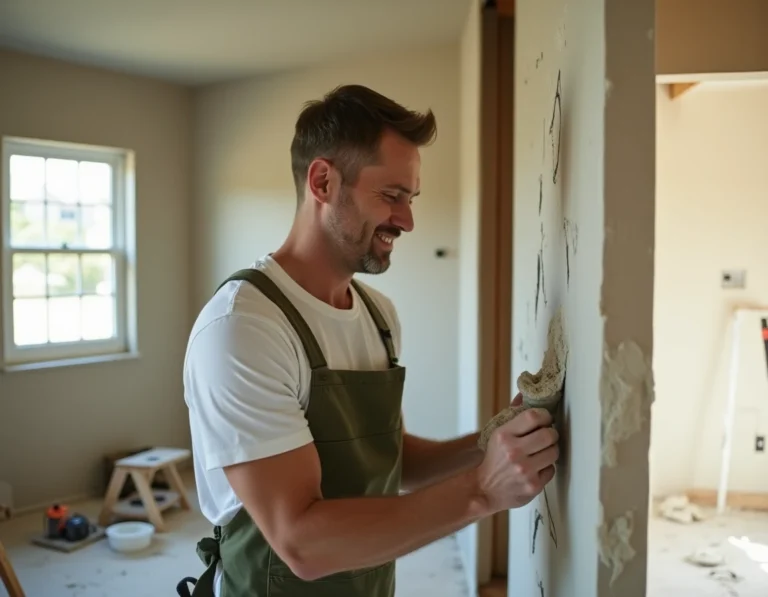
Applying trendy wallpaper is not a challenge reserved for experts. Forget the cliché of the stubborn roll and the bumpy wall: with precise gestures and a few precautions, it is entirely possible to transform a room in your home without any missteps or unpleasant surprises. The key? A rigorous method, from preparing the walls to the final cuts, for a clean and contemporary result. Here’s how to go about it.
Preparing the walls: the foundation of everything
Every change begins with a careful preparation phase. Before being tempted by a pattern or color, you must first tackle the surface. A neglected wall will inevitably spoil the final result.
In practice, it’s simple: clear the walls of any residue, old glue marks, peeling paint, and remnants of forgotten wallpaper. A scraper or spatula will do the trick. Then proceed to light sanding to smooth out any imperfections. Next comes washing: clean using a mild product, rinse thoroughly, and then let the wall dry without rushing. If you encounter a hole or crack, don’t hesitate to bring out the filler and smooth it out once dry. Finally, apply a primer or undercoat; nothing is more disappointing than wallpaper that starts peeling after a few weeks.
Choosing the right wallpaper: to simplify your life
The material you choose influences the atmosphere, of course, but also the ease of application. Why complicate your life when there are coverings available today that are within everyone’s reach? Here’s a quick overview to help you out:
- Vinyl wallpaper: Durable and relaxed in the face of humidity, it is gladly welcomed in the kitchen or bathroom. A quick wipe with a sponge and it’s clean.
- Non-woven wallpaper: Ideal for those in a hurry or those who want to avoid the pasting table. Here, the glue is applied directly to the wall, making everything simpler, even removal during a future change.
- Traditional wallpaper: It plays the variety card with an endless range of patterns. But it requires real precision, as each strip is applied individually, which slows down the process a bit.
To delve deeper into this topic or gather inspiring ideas, you can consult a comprehensive file on this subject.
The application technique, in practice
Applying wallpaper is not a matter of magic, but of method. From the cutting stage, be attentive: measure your strips with a small margin at the top and bottom, so you can adjust later. Spread the glue, either on the wall or on the paper, depending on the model, evenly. Place the first strip starting from a corner and check the verticality with a level. To avoid bubbles, start from the center and push the air towards the edges with a brush. If necessary, smooth out to perfect adhesion and clean any glue residue with a damp sponge. Strip by strip, keep the rhythm, ensuring the alignment of the patterns for a continuous and harmonious result.
Finishing touches: leave nothing to chance
It’s these final gestures that separate quick DIY from a neat job. To succeed in the finishing touches, it’s better to be meticulous about every detail:
- Each pattern must perfectly match, without any offset or visible seams.
- Carefully cut with a utility knife along the baseboards and ceilings for clean edges.
- Around outlets and switches, don’t hesitate to make precise incisions and adjust gently.
- A careful eye to detect any defects, bubbles, or small wrinkles: it’s better to correct them right away.
These last-minute adjustments give a real flair to the room. No hidden talent is needed: just rigor, a bit of patience, and the result immediately takes on a different dimension.
In the end, the difference is noticeable as soon as you walk in: a room dressed with care, perfectly smooth, suddenly reveals a new personality. There’s the tangible satisfaction of having transformed the space, gesture by gesture, and enjoying it every day.