
When you push open the door of a Nocibé store, you enter a space designed from the outset for customers to move freely among the bottles, without imposing counters or salespeople lurking. This choice, made in 1984 in Lille by Daniel Vercamer, has structured everything that followed: the choice of name, territorial network, and the acquisition by a German group.
Understanding how a regional perfumery from the North became a national network of several hundred points of sale involves following a series of very concrete operational decisions.
Nosy Be, ylang-ylang, and brand identity: what the name Nocibé tells
The name Nocibé comes from the island of Nosy Be, off the coast of Madagascar. This island is known for its production of ylang-ylang, a flower widely used in perfumery as a heart or base note. By choosing this reference, Daniel Vercamer anchored his brand in the world of natural raw materials, rather than in that of Parisian luxury.
This positioning is not trivial. At the time, selective perfumery in France operated on a fairly rigid model: closed counters, dedicated consultants, and a clientele loyal to the perfume brand more than to the store itself. Nocibé took the opposite approach by offering free access to high-end beauty products, in an environment that resembled more of a discovery space than a traditional shop.
For those who want to delve deeper into the history and origin of the Nocibé group, the brand’s journey illustrates how a differentiating commercial concept can endure over four decades.

Selective distribution strategy from Lille: how Nocibé has woven its network across France
Nocibé did not seek to establish itself on the Champs-Élysées. The development was built from northern France, with a logic of urban proximity and regional shopping centers. This selective distribution approach targeted medium-sized cities where competition from large Parisian perfumeries remained low.
The growth of the network occurred in stages:
- Initial establishment in Hauts-de-France with stores in city centers and shopping galleries, on modest but well-stocked surfaces.
- Progressive expansion west and south, favoring locations with high foot traffic rather than prestigious addresses.
This network has allowed Nocibé to position itself among the main selective perfumery networks in France, alongside Sephora and Marionnaud, but with a distinct identity: fewer flagships, more human-sized stores.
Acquisition by Douglas and shift to an omnichannel model
The structural turning point for Nocibé was the acquisition by the German group Douglas. This acquisition changed the game on several operational levels. Nocibé transitioned from a family-run network managed from Lille to a subsidiary of a publicly traded European group, with objectives for convergence between physical stores, e-commerce, and beauty institutes.
The brand now operates as a beauty services platform, not just as a simple network of perfumeries. In stores, there are integrated institutes, immersive animations (brand podiums, advisory pathways), and a digital offering aligned with the physical catalog.
What the Douglas logic changes daily in-store
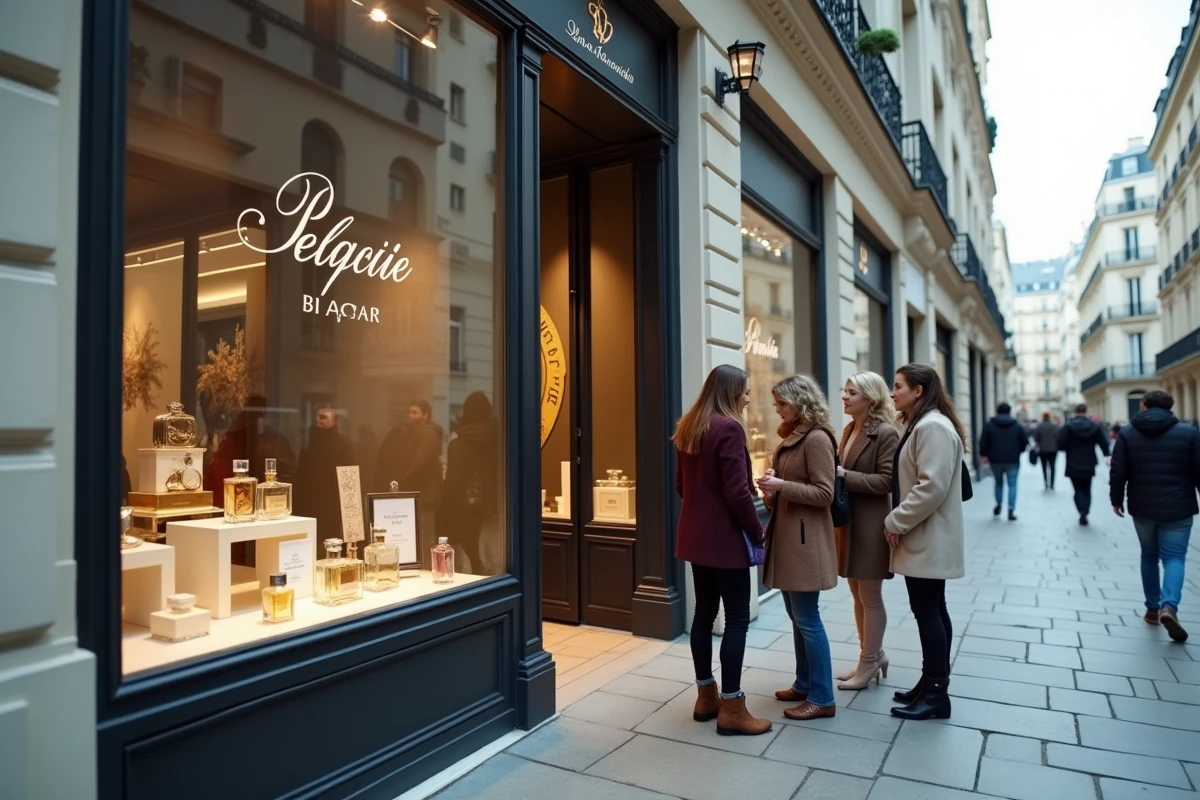
Feedback varies on this point depending on the brands, but the underlying trend is clear in the sector: the French selective perfumery market is shifting towards in-store experiences rather than just the sale of bottles. Nocibé has embraced this evolution with concrete initiatives, such as immersive podiums developed with brands like Shiseido, which transform a sales area into a sensory space.
This marketing strategy responds to consumer behavior that wants to test, smell, and receive advice before purchasing, even when finalizing their order online. The store becomes a point of contact, not just a point of sale.
Nocibé facing the constraints of the cosmetics sector in France
Distributing cosmetic products and perfumes in France involves navigating a precise regulatory framework. The terms “natural,” “vegan,” or “of natural origin” found on some Nocibé product sheets are not mere marketing arguments: they commit the brand to traceability and the composition of the formulas offered.
For a network the size of Nocibé, this means:
- A product referencing process that filters brands according to their compliance with European cosmetics standards.
- In-store and online communication that must remain consistent with the claims on the packaging.
- Skill enhancement for advisory teams, who must be able to explain the difference between a perfume made from natural flowers and a synthetic composition.
This framework pushes selective perfumery brands to professionalize their product approach well beyond the simple act of selling. Nocibé has built its credibility on this ability to advise, inherited from Daniel Vercamer’s original concept.
A positioning between accessibility and selectivity
The paradox of Nocibé, since its creation, lies in this balance: offering high-end perfume and cosmetic brands while remaining accessible to a clientele that does not frequent niche boutiques. The network has never shifted towards discount or exclusive luxury. This line, maintained over four decades, partly explains why the brand has retained a loyal consumer base despite successive acquisitions and changes in the beauty sector in France.
The Lille-based brand remains a case study in French selective distribution. Its history shows that a clear concept, established from the start, can survive changes in ownership as long as the in-store customer experience remains the guiding thread.