Creativity in daily life is not something that can be decreed; it must be prepared. Structuring your environment, routines, and work tools directly influences the quality of ideas that emerge, whether in a professional or personal setting. Here, we discuss concrete levers that transform a rigid organization into a creative fertile ground.
Cognitive Architecture: Preparing the Brain Before the Creative Session
The brain does not instantly switch to creative mode. The transition between analytical tasks and divergent thinking requires a cognitive decompression period of about ten minutes. We recommend scheduling this transition time in the agenda, not right after lunch or at the end of the day.
The principle is simple: reduce the load on working memory before engaging the mind for creative projects. Close tabs, put down the phone, and doodle freely on paper. This initiation ritual is not trivial; it reconfigures attention.
Many employees try to jump from a budget meeting to a brainstorming session without any transition. The result: flat ideas, mirroring the constraints they have just dealt with. Planning a dedicated transition block during the week radically changes the quality of creative output.
For those looking for concrete resources on organization and daily inspiration, Le Site de Julia offers approaches that pragmatically combine creativity and time management.
Work Environment and Creative Stimulation
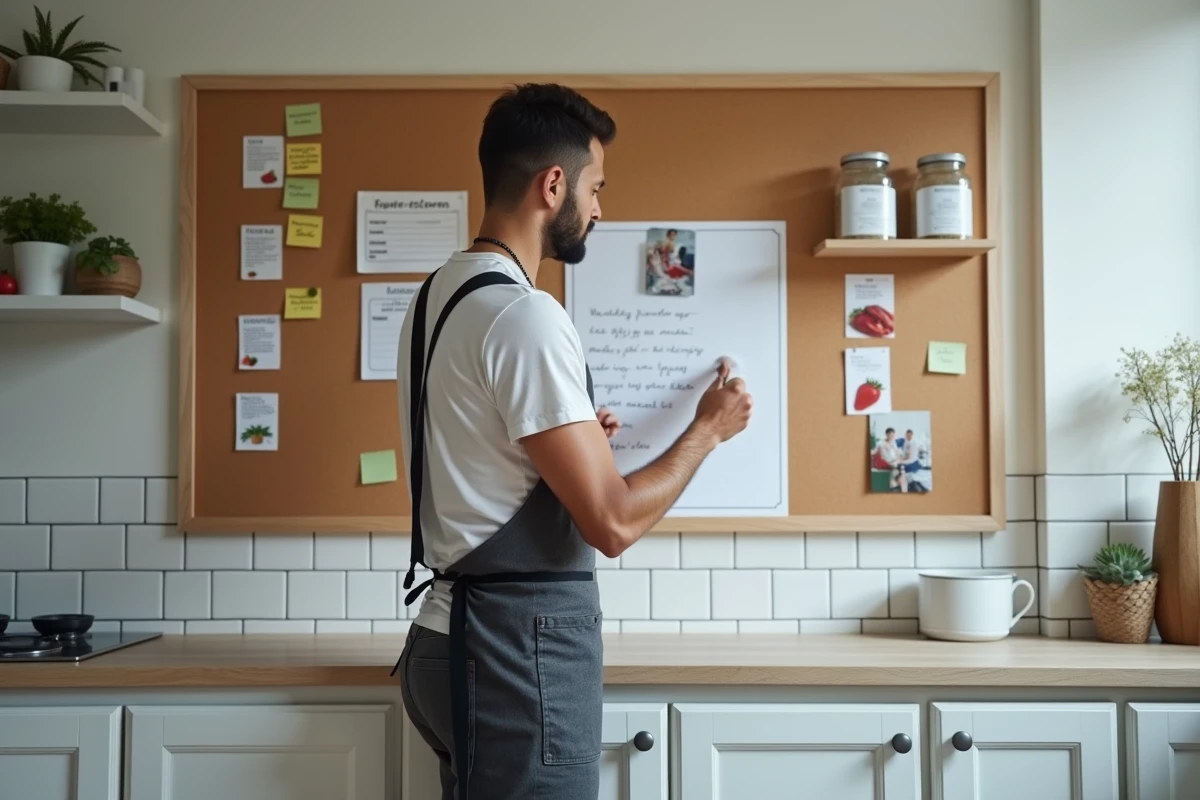
The physical environment acts as a filter on thought. A place saturated with visual information (post-its, posters, screen notifications) fatigues attention and reduces the ability to produce new idea associations.
Conversely, a space that is too bare deprives the brain of stimuli. The balance lies in the choice of elements present in the workspace:
- An object or image unrelated to the current project, serving as an anchor point for lateral thinking (a pebble, a postcard, an old tool)
- A physical notebook accessible at all times, dedicated exclusively to raw ideas, without quality filtering or categorization
- A controlled sound source: instrumental music or light ambient noise, never podcasts or spoken radio during idea generation phases
We observe that employees who personalize their workspace according to these principles generate more varied proposals during collective sessions. The link between environment and creativity is not decorative; it is functional.
Organizational Rituals That Protect Creative Time
Protecting creative time requires treating it as a non-negotiable task. Classic organizational tips (to-do lists, time blocks) often fail because they treat creativity as a luxury, a bonus that is scheduled “if the planning allows.”
The opposite approach works better: first block out creative time slots in the week, then organize the rest around them. Two to three forty-minute slots are sufficient. The brain needs regularity to associate a moment with a mode of thinking.

The most common trap remains contamination by urgency. A skipped creative slot “just this once” quickly becomes a canceled slot. The most effective trick we have tested: treat the creative block like a meeting with a client. You don’t cancel it to respond to an email.
Capturing Ideas Out of Context
Inspiration does not adhere to scheduled time slots. Most good ideas arise outside the workplace: in the shower, while walking, during commutes.
Without a capture system, these ideas disappear. A ten-second voice memo or a quick note on your phone is enough. The mistake would be to try to develop the idea on the spot. Capture first, evaluate later, during the next dedicated creative block.
Collective Creativity: Going Beyond Traditional Brainstorming
Traditional brainstorming favors extroverted profiles and produces a volume of ideas that masks their low diversity. For collective projects, we recommend separating the individual generation phase from the confrontation phase.
Each participant notes their ideas alone for about fifteen minutes, then the group shares and combines. This format, sometimes called brainwriting, reduces the effect of conformity and allows proposals to emerge that no one would have dared to voice aloud.
- Limit the group to four or five people maximum to maintain diversity without diluting depth
- Assign a role of “benevolent challenger” who questions each idea with concrete constraints
- Close the session by selecting three ideas to prototype within the week, no more
Collective creativity does not depend on the number of participants or the duration of the meeting. It depends on the quality of the framework established beforehand.
Daily Routine and Renewal of Inspiration
A creative daily life relies on intentional micro-disruptions. Taking a different route to work, reading an article in a field unrelated to your own, drawing an everyday object for five minutes: these actions feed the reservoir of mental associations.
The danger of routine lies in its ability to render invisible what surrounds us. Varying just one parameter each day is enough to reignite curiosity without disrupting the organization of the week.
Advice that advocates “changing everything” generates decision fatigue. Sustainable creativity relies on a stable structure with controlled points of variation. It is in this balance between organization and exploration that the creative mind finds its cruising rhythm.