
The choice of a hat when wearing bangs is not just a seasonal style question. Bangs alter the visual balance of the upper third of the face, and the headwear either enhances this line or blurs it. Here, we discuss the technical parameters that make the difference between a hat that highlights the bangs and one that flattens them.
Interaction between the hat brim and the placement of the bangs
A rigid brim pressed against the forehead pushes the bangs down and compresses them. The result: flattened strands that lose their movement within the first few minutes. A soft brim allows the bangs to breathe and reposition naturally, preserving volume without creating marks on the hair.
The width of the brim also affects the proportions of the face. A very wide brim on a round face with straight bangs weighs down the upper half. Conversely, a medium brim (neither wide-brimmed nor minimalist) maintains a balance between structure and lightness.
We recommend testing the hat slightly further back on the head, so that the bangs extend one to two centimeters below the brim line. This placement avoids the “helmet” effect and keeps the bangs visible, which remains the initial goal when wearing this accessory.
For those who want to explore possible combinations, you can discover trends on Actu Mode and refine your selection based on your bangs’ cut.
Straw hat and bangs: the technical couple to master
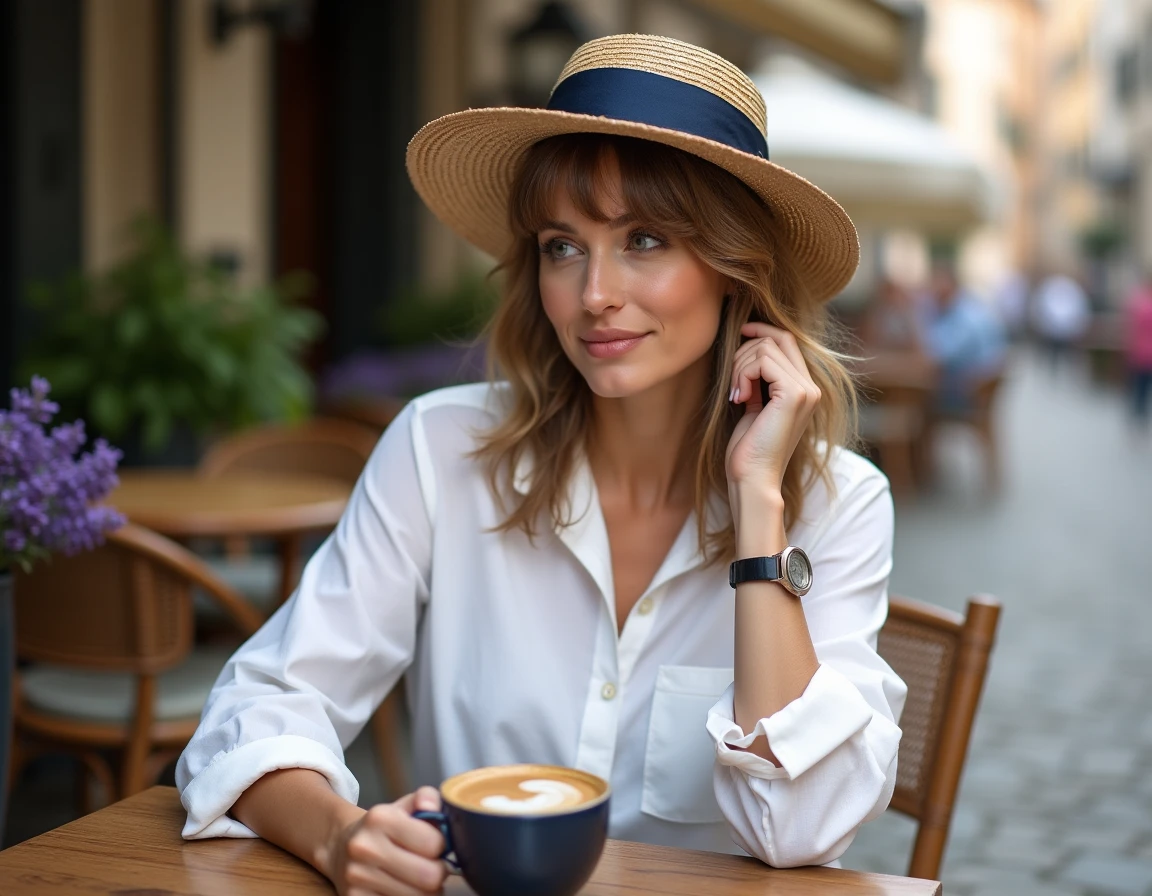
Straw remains the go-to material for the warm season, but not all straws are equal when it comes to a bangs hairstyle. A straw that is too open allows UV rays to pass directly onto the scalp, negating the protective function of the hat. UV-treated straw combines sun protection and lightness without weighing down the hairstyle, a distinct criterion from the simple “summer hat” that most guides overlook.
The weaving influences the rigidity of the brim. A tight weave produces a firmer brim that maintains its shape, while a loose weave gives a soft and drooping brim. With curtain bangs, the soft brim works better because it follows the lateral movement of the strands. With thick straight bangs, a slightly structured brim frames the face better.
The Panama hat illustrates this logic well. Its clean line visually structures the face without adding excessive height, making it the most versatile model for balancing a bangs hairstyle. Its shallow crown prevents it from engulfing the top of the head and allows the bangs to occupy the frontal space.
Fedora, bob, or wide-brimmed hat: which hat to choose according to the type of bangs
The type of bangs determines the style of the hat, not the other way around. Starting with the hat to adapt the bangs is like working backward.
- The short straight bangs pair well with a fedora worn slightly back, because the clean line of the bangs and the structure of the hat create geometric coherence. The bob, too rounded, creates a soft contrast that dulls the precision of the cut.
- The curtain bangs, parted in the center, go well with the bob or a soft-brimmed hat. The strands frame the face, and the relaxed brim extends this soft asymmetry. A rigid fedora would conflict with the fluidity of these bangs.
- The long, tapered bangs, which almost blend with the front strands, gain presence under a medium-brimmed wide-brim hat. The volume of the hat compensates for the fineness of the strands and rebalances the hairstyle’s silhouette.
- The curly or textured bangs require a hat with interior space. A cotton bob or a high-crowned straw hat prevents the curls from being flattened against the forehead.
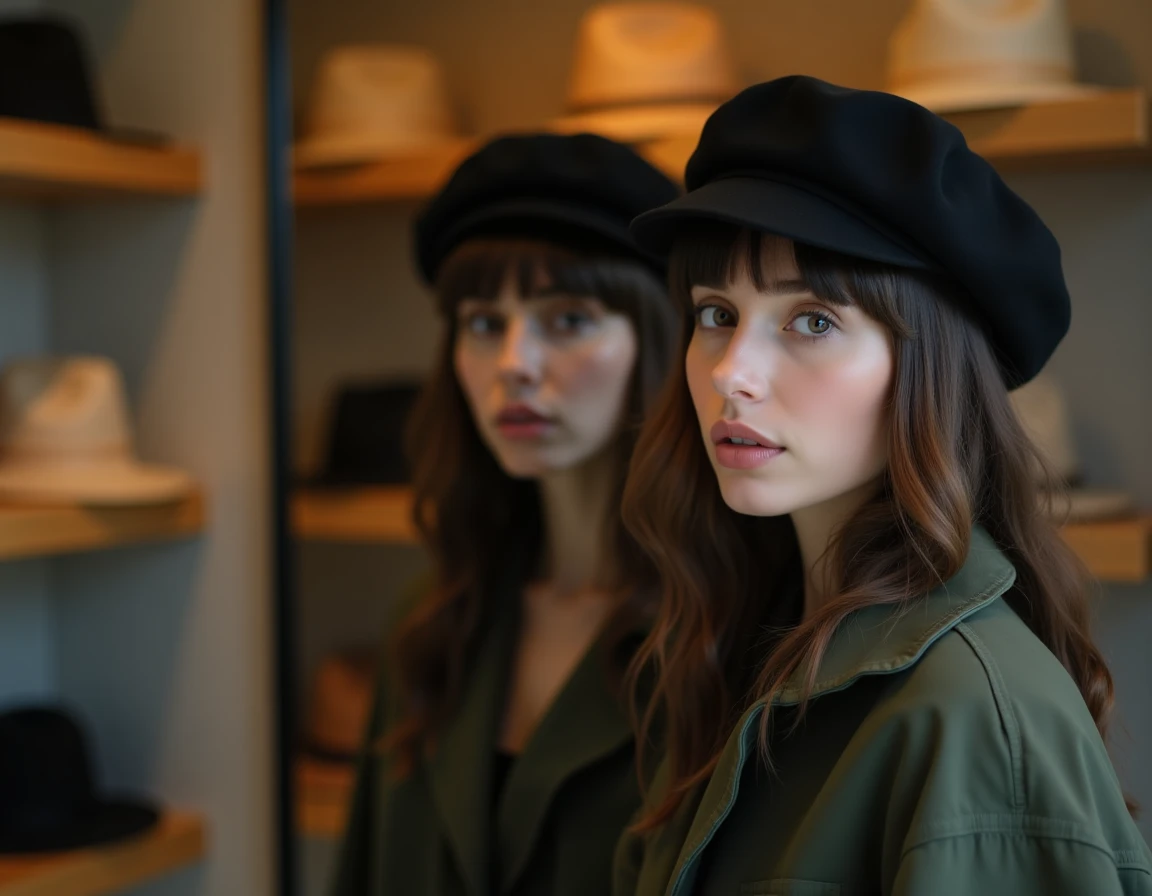
Hat colors and harmony with the bangs
The color of the hat directly interacts with the shade of the hair at the bangs level, as both are in the same visual field. A contrast that is too strong between the hat and the bangs draws attention to the demarcation rather than the overall look.
On light or blonde hair, natural straw tones, beige, and cream extend the hair palette without interruption. Dark shades (black, navy) function as a graphic frame, but only if the bangs are dense enough to “hold” visually against the contrast.
On brown or black hair, warm colors (camel, cognac, terracotta) add depth without overwhelming. A black hat on black hair creates a dark block that can make the bangs disappear into the mass.
For a wedding or formal occasion, we observe that powdery shades (pale pink, lavender, ivory) enhance the bangs by softening the transition between hair and hat. A bride with bangs would benefit from choosing a fascinator or a hat with a veil in a tone close to her dress to maintain the unity of the silhouette.
Hat maintenance when wearing bangs daily
The bangs deposit sebum and residues from styling products on the inner face of the hat. This transfer greases the inner band faster than with a hairstyle without bangs, and stains eventually mark the straw or felt.
Sliding a removable cotton headband inside the hat protects the material and washes easily. This solution extends the life of the hat without altering its drape.
Storing the hat upside down on its crown rather than resting it on its brim preserves the shape of the brim, which is crucial for the effect with the bangs. A deformed brim alters the shadow cast on the forehead and completely changes the desired effect.
The care given to the hat directly conditions the final appearance. A well-maintained hat, correctly positioned on the head, and chosen based on the type of bangs gives a clean, structured result that lasts all day without touch-ups.